Recycling and Sustainability for Fridge Disposal
 Fridge Disposal and fridge recycling sit at the heart of our boroughs' commitment to a circular, low-carbon future. Our program focuses on responsible refrigerator disposal, ensuring that every appliance collected is handled with care, hazardous components are neutralised, and useful materials are returned to the economy. We set an ambitious recycling percentage target to drive continuous improvement across collection, processing and reuse.
Residents can expect a transparent service for old fridge collection, aligned with local waste separation rules that many borough councils have adopted. These rules typically require separation of bulky electrical items from household recycling streams and designate WEEE (Waste Electrical and Electronic Equipment) as a separate collection category. By working with local transfer stations and council schemes, we ensure that unwanted fridges are routed correctly for safe dismantling and material recovery.
 Our headline goal is to achieve a minimum 85% recycling rate for materials salvaged from decommissioned refrigerators by 2030. This target covers metal recovery, plastics processing, refrigerant capture and component reuse. It is an operational benchmark for refrigerator disposal and fridge removal services across the metropolitan area, and it guides investments in partner facilities and low-carbon logistics.
Local Transfer Stations and Processing Hubs
We operate with a network of local transfer stations that accept bulky electrical waste and act as sorting hubs before larger-scale processing. These transfer stations are sited to reduce vehicle miles and to accelerate the movement of recovered materials to certified recyclers. Typical activities at the hubs include safe refrigerant extraction, separation of ferrous and non-ferrous metals, and sorting of recyclable plastics for mechanical or chemical recycling.
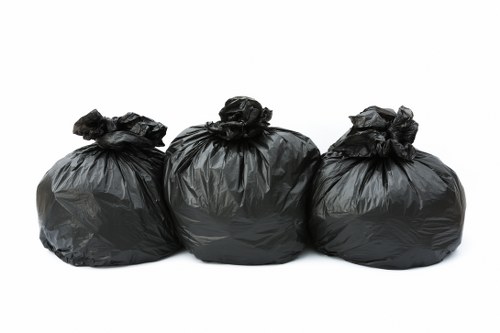 Close coordination with borough waste teams ensures that collection points and drop-off locations reflect local approaches to waste separation. In many boroughs, for example, residents separate WEEE and hazardous items at kerbside collection days or use scheduled bulky uplift services. Our logistics and transfer process supports those systems by receiving segregated loads and supplying feedback on contamination rates to help improve household sorting.
We list and work with a selection of council and privately run processing hubs, including municipal transfer stations, consolidated materials recovery facilities and specialist WEEE dismantlers. Key partners are audited to confirm compliance with environmental regulations, refrigerant handling standards and end-of-life material traceability.
Partnerships with Charities and Community Reuse
![A collection of multiple black plastic rubbish bags, filled and tied at the tops, are stacked together on a grassy area in front of a stone wall. The bags appear to contain general waste or discarded household items, with some slight wrinkles and creases visible on the plastic surface. The setting suggests an outdoor space, possibly a garden or driveway, with small scattered leaves on the grass. The stone wall in the background indicates a residential or semi-rural environment. This scene relates naturally to rubbish removal services, such as those provided by Fridge Disposal, serving local areas like [POSTCODE] or [TOWN], and highlights the need for proper waste collection and disposal.](/pub/_photos/rubbish/f1344684032.jpg) A cornerstone of our sustainability approach is partnership with local charities and social enterprises that refurbish working fridges or harvest serviceable parts for reuse. These collaborations reduce the demand for new appliances, extend product lifespans and support vulnerable households. Where a refrigerator is repairable, charity partners evaluate, refurbish and rehome units subject to safety checks.
A cornerstone of our sustainability approach is partnership with local charities and social enterprises that refurbish working fridges or harvest serviceable parts for reuse. These collaborations reduce the demand for new appliances, extend product lifespans and support vulnerable households. Where a refrigerator is repairable, charity partners evaluate, refurbish and rehome units subject to safety checks.
Partnership activity includes:
- Refurbishment programs that give low???cost appliances a second life;
- Material donations where components are supplied to vocational training and community workshops;
- Awareness campaigns to encourage residents to choose repair or reuse before disposal.
![A white wooden tray on a light-colored surface containing two knitted cushion covers with textured cable knit patterns, one in a soft beige tone and the other in light gray, with a stack of folded cable knit jumpers or throws in similar neutral shades placed beside the tray. The background features a pale, textured wall that complements the neutral colour palette. The scene is well-lit with natural light, highlighting the textured fabrics' detailed patterns and the smooth finish of the tray. This image visually relates to household textiles and can be referenced in the context of domestic rubbish removal or recycling services provided by Fridge Disposal in the UK, especially in areas around [POSTCODE] or [TOWN], as seen on the 'Recycling and Sustainability' page. The setting suggests an indoor, organized space suitable for efficient disposal or recycling of fabric items or household waste.](/pub/_photos/rubbish/turntrashintotreasurereusingwornoutclothes03.jpg) Logistics are a major factor in reducing overall carbon impact, so our fleet increasingly uses low-carbon vans and electric vehicles for fridge collection and transport. By deploying dedicated electric or hybrid removal vehicles and optimising route planning, we reduce emissions from fridge removal operations and lower the lifecycle carbon footprint of the disposal chain. This applies to scheduled bulky collections and on-demand refrigerator pickup alike.
Logistics are a major factor in reducing overall carbon impact, so our fleet increasingly uses low-carbon vans and electric vehicles for fridge collection and transport. By deploying dedicated electric or hybrid removal vehicles and optimising route planning, we reduce emissions from fridge removal operations and lower the lifecycle carbon footprint of the disposal chain. This applies to scheduled bulky collections and on-demand refrigerator pickup alike.
Operational practices emphasise responsible refrigerant handling, documented chain-of-custody and maximum material recovery. Technicians are trained in safe refrigerant extraction to prevent greenhouse gas release, and all recovered refrigerants are sent to licensed reclamation or destruction facilities. Metal streams???steel, aluminum and copper???are separated for high-quality recycling, while plastics are channelled to reprocessors that can turn mixed polymer grades into usable feedstock.
To track progress toward our recycling percentage target and wider sustainability commitments, we publish regular performance summaries and engage with regional waste authorities. These reports include metrics on tonnes collected, percentage of material recycled, refrigerant recovery efficiency and the share of collections performed by low-carbon vans. Continuous improvement projects target contamination reduction at transfer stations and increased reuse via charity partnerships.
By combining ambitious targets, borough-aligned separation practices, robust transfer infrastructure, charity-led reuse and a low-carbon fleet, our fridge disposal and refrigerator recycling programme aims to be a model for sustainable, community-focused electrical waste management. We are committed to keeping hazardous substances out of the environment, returning valuable resources to the economy and supporting social value through reuse partnerships.